- For SME and Groups
- For Individuals
Group Health Insurance
About Cigna Healthcare
From HYROX to run clubs: How to look after sports injuries and stay in the game
From HYROX to run clubs: How to look after sports injuries and stay in the game

Singapore's fitness scene has never been more alive. On any given weekend, you’ll find runners at East Coast Park with their run clubs, athletes pushing through HYROX stations in indoor arenas, and climbers working their way up bouldering walls across the island. Community fitness has become a way of life for thousands of Singaporeans, and that's something worth celebrating.
But with more people pushing their physical limits than ever before, there's a side of fitness culture we don't talk about enough: sports injuries. Training harder puts more strain on your body, and without the right knowledge, even a small injury can put you out of action for weeks.
The good news? Most sports injuries are manageable. Knowing how to respond, recover, and protect yourself means you can keep doing what you love, for longer.
Singapore's fitness boom — and the rise of exercise injuries
The numbers tell a compelling story. Singaporeans are increasingly embracing high-intensity and endurance-based physical activity, from obstacle course races and triathlons to functional fitness competitions like HYROX, which has seen explosive global growth and a passionate local following. Bouldering gyms such as Climb Central and Boulder World have become social hubs as much as training spaces, attracting everyone from seasoned athletes to complete beginners.
Musculoskeletal conditions — which include injuries to muscles, joints, connective tissues, and ligaments — are among the most reported physical health concerns among active adults. These are precisely the types of injuries most associated with high-intensity training and repetitive physical activity.
The most common culprits? Overuse injuries from training too frequently without adequate rest, poor training practices, insufficient warm-up, and jumping too quickly into demanding programmes without building a proper fitness base. The excitement of signing up for your first HYROX or joining a run club can sometimes override the patience that good physical conditioning requires.
Common sports injuries to know
While every sport carries its own risks, a handful of common sports injuries keep showing up across fitness communities.
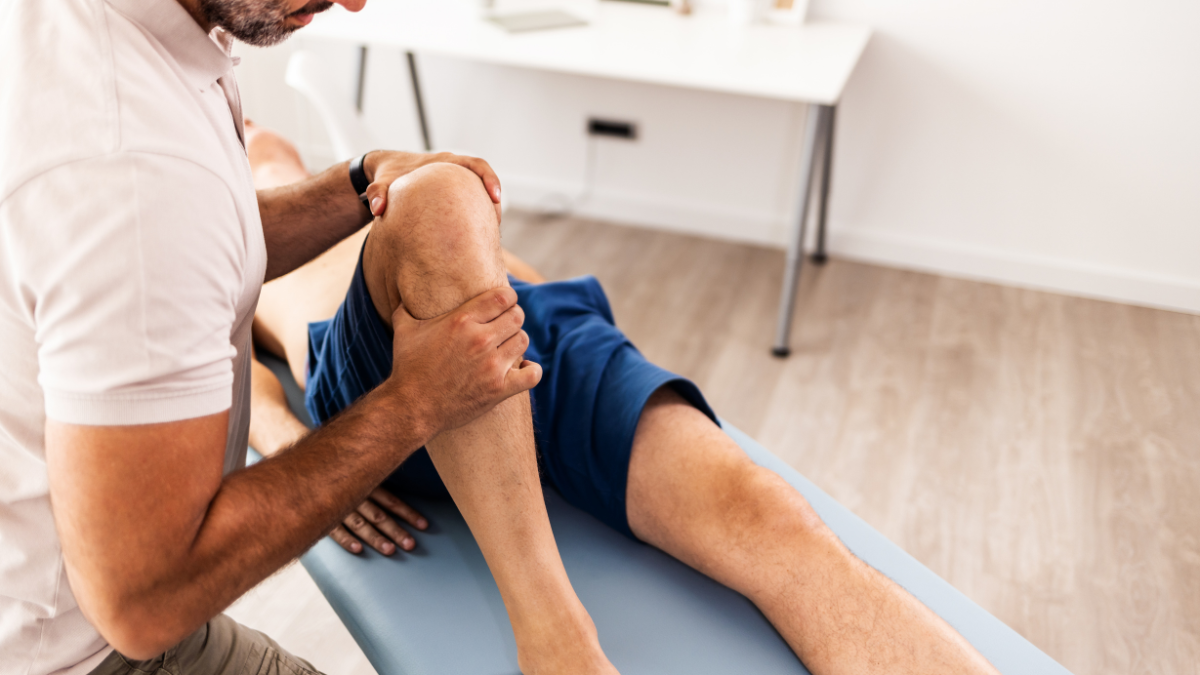
Knee injuries are among the most frequent. Anterior cruciate ligament (ACL) tears are particularly common in contact sports and activities involving sudden changes of direction. An ACL injury often comes with a popping sensation at the moment of impact, followed by rapid swelling and instability in the knee joint. Runner's knee and IT band syndrome are also familiar complaints among run club members and endurance athletes.
Shoulder injuries — including rotator cuff strains and tears — are especially prevalent in bouldering and overhead lifting. A complete tear of the rotator cuff typically requires assessment by orthopaedic surgeons and, in severe cases, may involve surgical repair.
Overuse injuries such as shin splints, stress fractures, and Achilles tendon problems develop gradually rather than from a single sudden impact. The Achilles tendon, which connects the calf muscles to the heel bone, is placed under significant strain during running and jumping. Stress fractures — small cracks that develop in the shin bone or other weight-bearing bones when a fracture occurs from repetitive load — are another common concern for high-mileage runners.
Tennis elbow, despite the name, affects far more than tennis players. It's an overuse injury of the elbow joint caused by repetitive motions, and it's increasingly seen in functional fitness athletes.
Muscle strains and sprains to the ankles and wrists round out the list, particularly in bouldering and high-intensity functional training.
The reassuring reality is that the vast majority of sports injuries respond well to proper care. The key is knowing what that care looks like — and when to seek medical attention.
What to do when you're injured
The instinct for many active people is to push through discomfort. It's worth resisting that urge. When an injury occurs, stop the activity and assess the injured area carefully.
For most acute injuries — sprains, muscle strains, and minor soft tissue damage — sports medicine professionals recommend the P.O.L.I.C.E. method:
- Protection — Shield the injured area from further damage immediately after injury.
- Optimal Loading — Gentle, progressive movement is encouraged as soon as it's tolerable, as it promotes healing and maintains blood flow to the affected area.
- Ice — Place a cold pack or ice wrapped in a cloth on the area for 15–20 minutes at a time to help ease pain and limit swelling.
- Compression — Use a bandage or compression wrap on the affected area to manage swelling during the acute phase.
- Elevation — Whenever possible, position the injured area above the level of the heart to help reduce swelling and discomfort.
For pain relief, nonsteroidal anti-inflammatory drugs (NSAIDs) such as ibuprofen are commonly used during the acute phase to manage inflammation and discomfort. Always follow dosage guidance and consult a healthcare provider if you are unsure.
However, some injuries require more than home management.
Seek medical attention if you experience any of the following symptoms:
- Pain that persists beyond 48–72 hours
- A dull ache that doesn't settle with rest
- Significant swelling that isn't subsiding
- A noticeable reduction in your range of motion
- A popping sensation at the time of injury, or any suspected broken bone or dislocated joint.
Severe fractures and complete ligament tears will require imaging tests and assessment from healthcare professionals or orthopaedic surgeons to reach an accurate diagnosis. When in doubt, always get it checked by your family physician as a first step, who can refer you onward as needed.
The role of physiotherapy in recovery
Rest alone rarely gets you back to full form, and that’s where physiotherapy makes a real difference.
A physiotherapist doesn't just treat the immediate injury; they assess the underlying movement patterns and risk factors that may have contributed to it in the first place.
Through strengthening exercises, manual therapy, and a structured return-to-training plan, physiotherapy supports the healing process properly — rather than leaving you recovered enough only to re-injure yourself. In some cases, treatments such as platelet-rich plasma (PRP) therapy are used to support recovery in soft tissues, though these are typically explored after conservative treatment has been assessed by healthcare professionals.
It's worth noting that many global health insurance plans include cover for physiotherapy and outpatient rehabilitation. Checking your policy before you need it means you can access the right care quickly, without hesitation.

Preventing sports injuries before they happen
The most effective injury management is prevention. A few consistent habits significantly reduce your risk factors:
Warm up properly. Five to ten minutes of dynamic movement prepares your soft tissues and joints for the demands ahead. Static stretching is better saved for after your session.
Build progressively and avoid poor training practices. One of the most common mistakes in HYROX and race preparation is ramping up training volume too quickly. Increase your load gradually and give your body time to adapt. Sudden increases in mileage or intensity are a leading cause of stress fractures and overuse injuries.
Use proper technique and the right sports equipment. Poor technique places unnecessary strain on joints and connective tissues. Proper footwear and well-fitted sports equipment matter enormously — particularly for runners, where the wrong shoe can contribute to shin splints, Achilles tendon issues, and knee injuries over time.
Prioritise recovery. Sleep, hydration, and nutrition are core components of the healing process and injury prevention. Muscle repair happens during rest, not during training.
Listen to your body. There is a meaningful difference between the productive discomfort of a hard workout and the warning signal of an injured body under too much strain. Learning to tell them apart is one of the most valuable skills any athlete — seasoned or new — can develop. A dull ache that lingers after training, for example, is worth taking seriously before it becomes something more.

Stay active, stay smart
Fitness communities in Singapore are built on energy, camaraderie, and a shared love of pushing limits, and the health benefits of that active lifestyle are real and significant. None of that needs to stop because of injury. But it does require a smarter, more informed approach to physical care.
Whether you're preparing for your first 5K with a run club, training for HYROX, or working up a new bouldering route, looking after your body is what keeps you in the game season after season.
Want to learn more about protecting your physical health and wellbeing? Browse our content hub for expert guides on physical care, physiotherapy, and recovery.
Related articles
© Cigna Healthcare. All rights reserved.
Cigna Europe Insurance Company S.A.-N.V. Singapore Branch (Registration Number: T10FC0145E), is a foreign branch of Cigna Europe Insurance Company S.A.-N.V., registered in Belgium with limited liability, with its registered office at 152 Beach Road, #33-05/06 The Gateway East, Singapore 189721.
The Cigna Healthcare name, logo, and other Cigna Healthcare marks are owned by The Cigna Group Intellectual Property, Inc. licensed for use by Cigna Corporation and its operating subsidiaries. All products and services are provided by or through such operating subsidiaries, and not by Cigna Corporation. Such operating subsidiaries include Cigna Europe Insurance Company S.A.-N.V. Singapore Branch.
