- For SME and Groups
- For Individuals
Group Health Insurance
About Cigna Healthcare
The Future of Employee Healthcare
The Future of Employee Healthcare: 3 Key Takeaways on Sustainable Employee Well-being

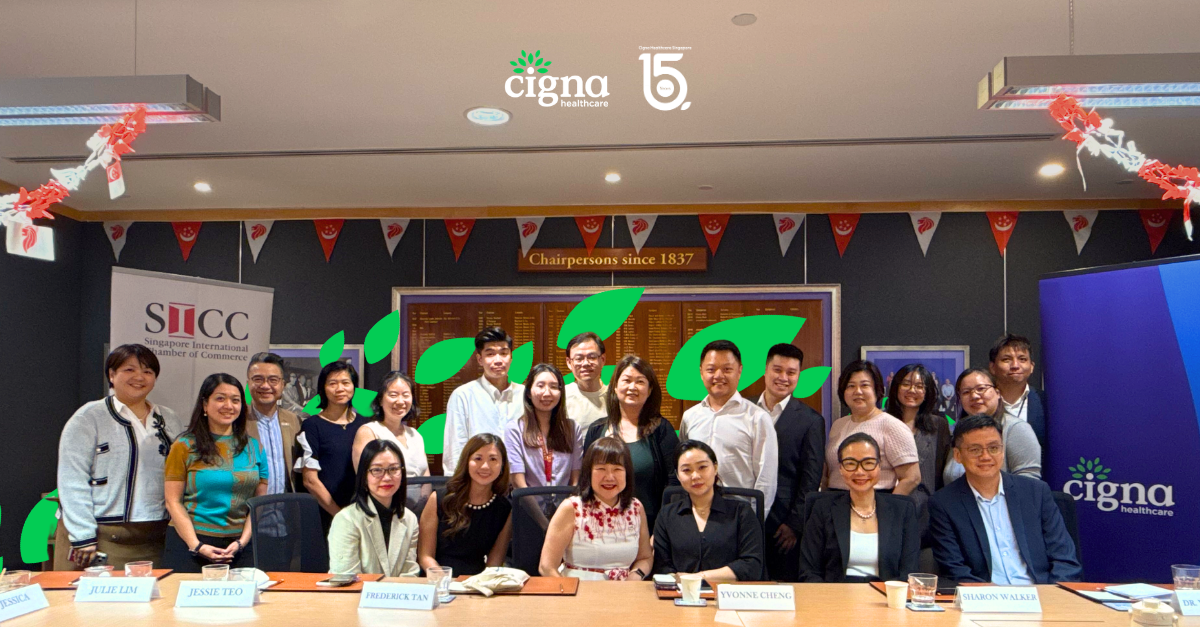
Employers are under increasing pressure to deliver meaningful healthcare benefits, amidst rising healthcare costs in Singapore and medical inflation. This was the core challenge that our second Cigna Healthcare Singapore HR Connect Forum tackled: How can organisations balance cost, quality care, and employee experience in a rapidly evolving healthcare landscape?
Together with Dr Yeoh Kai Tze, Head of Product Strategy and Healthcare Propositions, Cigna Healthcare Singapore and Australia, Sharon Walker, Client Partner and Practice Leader at Korn Ferry ASEAN, and moderator Jamus Heng, Business Development Manager, Cigna Healthcare Singapore, the forum discussed key strategies on managing sustainable employee well-being in 2026 and beyond.
These are the three key takeaways emerged from the conversation.
Sustainable healthcare plans are about guiding access to appropriate care, versus cost cutting
A common misconception about cost containment is that it hinges on reducing benefits and coverage; or about shifting costs to employees through heavier co-pays. Instead, organisations should focus on helping employees access appropriate care through guided healthcare pathways. When employees receive the appropriate care, in the appropriate setting, at the right time, it often leads to better health outcomes while reducing avoidable healthcare spend.
Often, wastage and unnecessary spending in the healthcare system arises when employees are unsure about their treatment plan or next steps. This may lead to over-treatment or utilising complex procedures when alternatives could be as effective.
Guided healthcare helps employees navigate an increasingly complex healthcare system with greater confidence. By helping individuals understand their options and access appropriate care more quickly, organisations can support better healthcare experiences and outcomes while reducing unnecessary complexity
An example of guided healthcare pathways includes Cigna's medical concierge services and our Clinical Case management team, that help members navigate the appropriate next step in their care journey, whether that means identifying the appropriate specialist, supporting treatment decisions, coordinating care pathways, or accessing care in the most appropriate setting. This guided-care philosophy is embedded in Cigna Care Connect 2.0, where data-driven insights, clinical expertise and Medical Concierge support work together to help members navigate their healthcare journey with confidence.
For employers, guided healthcare has the dual impact of improving both employee experience and healthcare efficiency. By reducing confusion and enabling more informed healthcare decisions, organisations can support better outcomes for employees while improving the sustainability of their healthcare programmes.
Prevention remains the most effective long-term cost management strategy
Many of today’s healthcare challenges are preventable.
According to our internal claims data, key drivers of healthcare claims and spend are musculoskeletal conditions, chronic conditions, influenza and mental health conditions – all preventable conditions that can be managed with healthy lifestyle modifications.
This presents an important opportunity for employers. Instead of focusing on treating illness after it occurs, organisations should focus on preventive measures that improve workforce health and reduce downstream costs.
Examples of preventive initiatives include in-office flu vaccination and health screening drives, workplace ergonomics, and wellness educational talks on healthy lifestyle habits.
Leaders should also role model healthy workplace behaviours, including practicing work-life balance to promote mental health and wellbeing. This creates a positive workplace environment in the office, building a momentum towards adopting healthier lifestyle habits amongst employees.
Beyond downstream health impact, healthier employees are also more productive, engaged and likely to thrive at work. As such, employers who invest in preventive healthcare initiatives are likely to see positive health impact, which translates into a healthier workforce requiring less serious medical care in the longer term.
The future of employee healthcare requires shared responsibility
Sustainable healthcare cannot be achieved by employers and healthcare providers alone.
Employers, employees, healthcare providers, and insurers all play an important role in creating a sustainable healthcare ecosystem; and collaboration between all players is more crucial than ever to improve health outcomes while managing healthcare costs.
For employers, this means picking a likeminded partner, like Cigna Healthcare, to ensure your employees have access to resources and tools to look after their health. This includes group health plans that has appropriate coverage for what your employees need, along with features like a medical concierge for smarter navigation leading to better healthcare outcomes.
For employees, it means taking ownership of their health through pro-active engagement with the resources made available to them. For example, adopting healthier habits after a health screening or opting for appropriate forms of healthcare treatments after conversations with their medical concierge.
Healthcare providers and insurers also have a role to play in ensuring quality, value-based care that aligns treatment decisions with patient needs.
Taken together, we see a collaborative approach towards sustainable healthcare, where everyone has a stake in bringing about better health outcomes for the individual.
Looking Ahead
The future of employee healthcare cannot simply be about managing costs. Rather, we must build sustainable systems that help people stay healthy, make informed healthcare decisions, and access the right support when they need it.
Looking ahead, sustainable employee healthcare will increasingly depend on helping individuals navigate care with confidence. By combining preventive health initiatives with guided healthcare pathways, data-driven insights, clinical expertise and strong partner collaboration, employers can support better health outcomes while building more sustainable healthcare programmes for the future.
Should you be interested in exploring how Cigna Healthcare can support you with your organisation's health, you can reach out on our group health plans.
If you would like to join us for our next HR Connect Forum or any of our future events, do join our mailing list.
Related articles
© Cigna Healthcare. All rights reserved.
Cigna Europe Insurance Company S.A.-N.V. Singapore Branch (Registration Number: T10FC0145E), is a foreign branch of Cigna Europe Insurance Company S.A.-N.V., registered in Belgium with limited liability, with its registered office at 152 Beach Road, #33-05/06 The Gateway East, Singapore 189721.
The Cigna Healthcare name, logo, and other Cigna Healthcare marks are owned by The Cigna Group Intellectual Property, Inc. licensed for use by Cigna Corporation and its operating subsidiaries. All products and services are provided by or through such operating subsidiaries, and not by Cigna Corporation. Such operating subsidiaries include Cigna Europe Insurance Company S.A.-N.V. Singapore Branch.
